

University of Oxford
Oxford Martin AI Governance Initiative · University of Oxford

Centre for Technology and Society

Emerging technologies are reshaping work and redistributing influence faster than our understanding of them can keep up. The CTS closes that gap with rigorous, evidence-first research, helping to ensure that technological change benefits society broadly and leaves power widely held — rather than concentrating it and deepening the inequalities we already have.

About the Centre

Understanding how emerging technologies change societies

The Centre for Technology and Society (CTS) aims to understand how emerging technologies — from artificial intelligence and biotechnology to blockchain and quantum computing — are transforming societies around the world.

We seek to identify the social, economic, and political consequences of new technologies, both within individual societies and globally: disparities in access to and benefit from them, the potential for new forms of inequality, and the governance mechanisms that may mitigate or worsen these effects.

Our distinctive contribution is empirical. Debate about technology and society is rich in speculation and thin on evidence. The CTS combines the empirical social sciences with computational and data science to establish how these technologies are actually reshaping economies and societies — not how they might, in principle, do so.

The Centre sits within the Oxford Martin AI Governance Initiative (AIGI) at the University of Oxford and is supported by the Sanjaya Lall Memorial Fund. It also hosts the Sanjaya Lall Visiting Professorship of Business and Development, one of the most prestigious visiting appointments in economics.

Research

Key research themes

Within a broad agenda, the Centre concentrates its effort where the evidence is thinnest and the stakes are highest.

Primary interest — I

AI, inequality, and the distribution of power

How these technologies concentrate or disperse economic and political influence among states, firms, and citizens — and whether a wide range of actors keeps a meaningful say, or advantage accumulates with those who already hold it.

  • Do they hand governments and a few dominant firms new instruments of surveillance and control?
  • Does unequal access to AI become unequal influence over public decisions, and over the institutions of democracy?
  • Or can institutional design — oversight, transparency, and countervailing power — keep influence widely shared?
Primary interest — II

The labour market implications of AI

How AI adoption is reshaping work, skills, and wages — and how firms, workers, and labour institutions are adapting. Unlike earlier automation, which fell on routine manual work, AI reaches into cognitive and professional occupations, where the scope for adjustment is untested.

  • Which tasks are being automated, and which augmented rather than replaced?
  • Where do the productivity gains accrue: to firms, to capital, or to workers themselves?
  • Who bears the costs of adjustment, and how fast can training respond?
Primary interest — III

Reshoring and the future of supply chains

After three decades of offshoring, countries like the United States and the United Kingdom are trying to bring production home. Which industries can realistically return, what capabilities have been lost, and what the shift means for the workers and regions meant to benefit.

  • Which industries can actually return, and which depend on tooling or processing capacity no longer found at home?
  • How do reshoring, nearshoring, and ally-shoring differ in cost, resilience, and political durability?
  • Where does emerging robotics make domestic production viable, and where do technological limits still bind?
Working Paper Series

New research, circulated early

The CTS Working Paper Series puts our research into circulation ahead of publication, so findings can inform debate while it is still live.

WP 2026-02 · August 2026

Tariffs, Geoeconomics and Political Cleavages: Evidence from American High-Tech Firms

Phuong Pham · Randall Stone

Browse the series

Other themes of interest
Equitable access Systemic bias Privacy Artificial intelligence Biotechnology Blockchain Quantum computing Governance mechanisms
Activities

What the Centre does

Impactful research

Commissioning and running interdisciplinary projects on our core themes, hosting visiting researchers, and creating opportunities for early-career scholars. Outputs range from academic publications to policy reports and briefings written for non-specialists.

Policy and public engagement

Lectures, workshops, and public forums on questions of broad interest. The Centre serves as a non-partisan source of evidence and analysis for policymakers, industry, and civil society working to mitigate AI's challenges and realise its benefits.

Supporting future leaders

Developing the next generation of technology governance leaders through mentoring and research opportunities for scholars at every career stage.

News & commentary

News from the Centre

Announcements, appointments, events, and writing for policy and public audiences from across the Centre and its affiliates.

  • Commentary

    The Chain of Peace: Do Supply Chain Chokepoints Deter War?

    Advanced semiconductors cannot be made by any one country. Design software is American, lithography machines Dutch, optics German, photoresists Japanese, fabrication Taiwanese — and remove any node and the chain breaks. Pham and Scholten argue that this structure, not Taiwan's foundries alone, is what deters conflict in the Taiwan Strait, because a chip fab seized by force produces nothing without the network behind it. The uncomfortable implication is that export controls and reshoring, each sensible in isolation, are steadily dismantling the interdependence that keeps the peace.

    Read at War on the Rocks →
People

Who we are

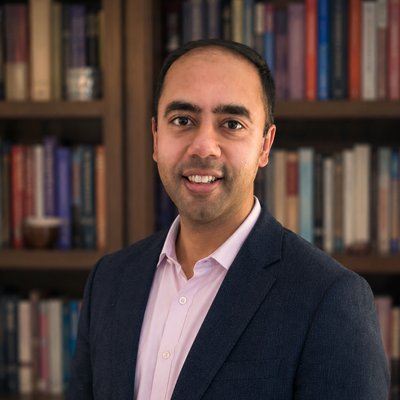
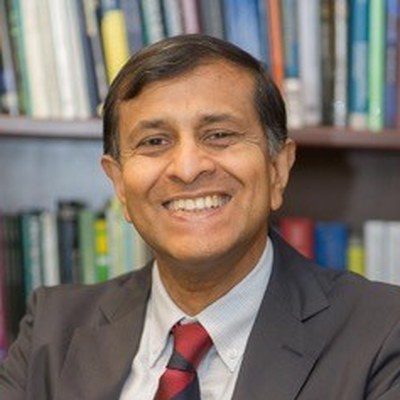
Portrait of Ranjit Lall

Ranjit Lall

Director

Professor of International Political Economy, University of Oxford

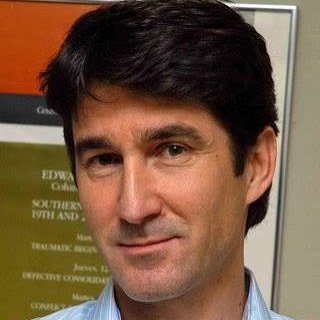
Portrait of Robert Trager

Robert Trager

Faculty Affiliate

Co-Director, Oxford Martin AI Governance Initiative, University of Oxford

Portrait of Maike Osborne

Maike Osborne

Faculty Affiliate

Co-Director, Oxford Martin AI Governance Initiative, University of Oxford

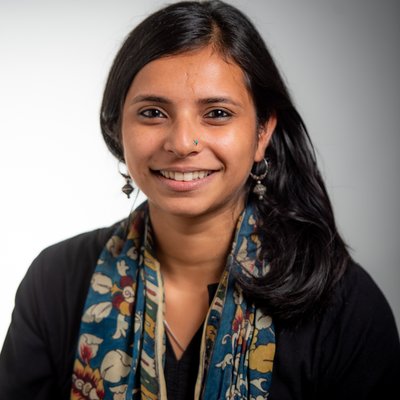
Portrait of Aarushi Kalra

Aarushi Kalra

Faculty Affiliate

Associate Professor of Economics, University of Oxford

Portrait of Thomas Robinson

Thomas Robinson

Faculty Affiliate

Assistant Professor in Methodology, London School of Economics

Portrait of Will Sentance

Will Sentance

Visiting Professor

CEO, Standard Matter · Founder, Codesmith

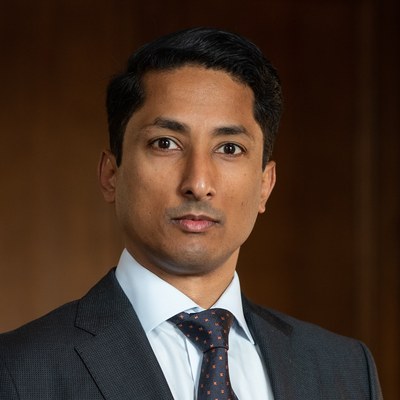
Portrait of Rahul Prabhakar

Rahul Prabhakar

Visiting Professor

Compliance Principal, Amazon Web Services

Portrait of Conor Black

Conor Black

Research Fellow

Architect and Design Computation Specialist, HOK

Portrait of Walter Mattli

Walter Mattli

Advisor

Professor and Supernumerary Fellow, St John's College, Oxford

Portrait of Phuong Pham

Phuong Pham

Doctoral Affiliate

PhD student in Political Science, University of Rochester

Portrait of Julian Jacobs

Julian Jacobs

Doctoral Affiliate

Research Scientist, Google DeepMind · DPhil Candidate, University of Oxford

Hosted by the Centre

The Sanjaya Lall Visiting Professorship

Each year the Centre hosts the Sanjaya Lall Visiting Professorship of Business and Development — one of the most prestigious visiting appointments in economics, held by Nobel laureates and Clark Medallists since 2011.

About the Professorship

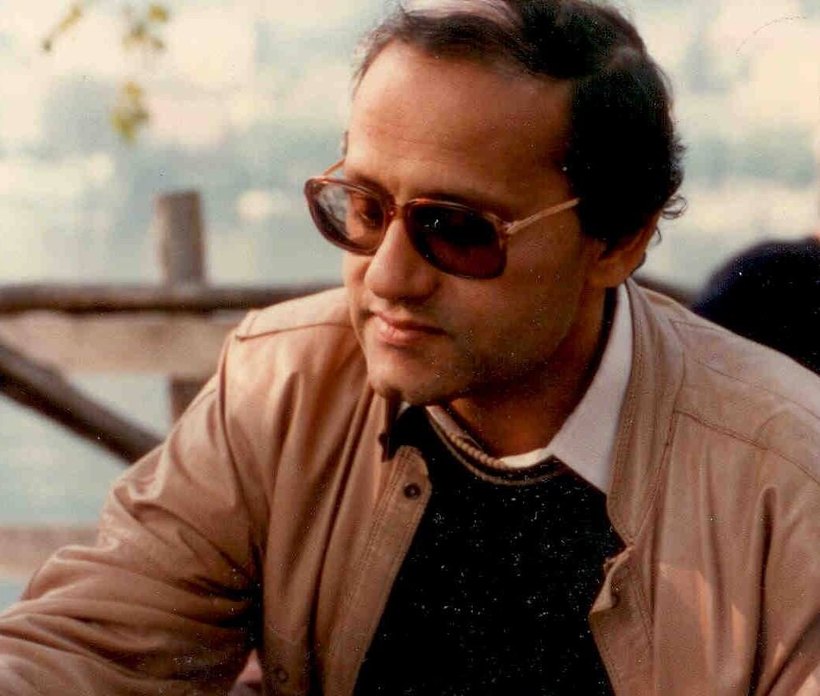
Professor Sanjaya Lall
Professor Sanjaya Lall (1940–2005)

Robert Wade · Dani Rodrik · Paul Krugman · Abhijit Banerjee · Avinash Dixit · Kenneth Rogoff · Esther Duflo · Joseph Stiglitz · Raj Chetty · Daron Acemoglu · Rohini Pande · Sendhil Mullainathan

Support the Centre

Evidence takes investment

Debate about technology's social effects is abundant. Reliable evidence about them is scarce — and building it is slower, harder, and less glamorous work.

The Centre is supported by the Sanjaya Lall Memorial Fund, which also endows the Sanjaya Lall Visiting Professorship. We welcome conversations with individuals, foundations, and organisations who share our commitment to rigorous, independent research.

Areas of particular interest:

  • Funding research projects on the labour market and power effects of AI
  • Endowing researcher posts and early-career fellowships
  • Sponsoring workshops and public forums open to the wider community
  • Supporting policy translation that connects findings to live debates
Contact

Get in touch

We welcome enquiries from researchers, journalists, policymakers, and prospective collaborators and funders.

Ranjit Lall

Director, CTS · Professor of International Political Economy

ranjit.lall@politics.ox.ac.uk →
A centre of the